

Why the Confidence System exists
In traditional ITF Taekwon-Do, the White Belt syllabus represents the complete foundation of the art. For adults, this foundation is demanding but generally achievable within a reasonable training period. Young children, however, develop physically, emotionally, and cognitively at a very different pace. Expecting a child between the ages of three and six to absorb the full adult beginner syllabus often creates frustration, loss of confidence, and reduced motivation.
The Emirates Taekwon-Do Confidence System was created to respect the natural developmental stages of young children while remaining faithful to the principles and technical standards of traditional Taekwon-Do. Instead of overwhelming children with a large amount of material at once, the system divides the beginner journey into smaller and more achievable milestones that build confidence progressively.
The Emirates Taekwon-Do Confidence System was created to respect the natural developmental stages of young children while remaining faithful to the principles and technical standards of traditional Taekwon-Do. Instead of overwhelming children with a large amount of material at once, the system divides the beginner journey into smaller and more achievable milestones that build confidence progressively.
Building confidence through achievable progress
Young children learn best through repetition, encouragement, positive reinforcement, and visible achievement. The Confidence System allows students to focus on mastering one core concept at a time while experiencing regular success throughout their journey.
Each stage is intentionally designed to help children develop not only martial arts techniques, but also confidence, discipline, focus, teamwork, emotional resilience, coordination, balance, and body awareness. Small victories create motivation. Motivation creates consistency. Consistency creates long-term growth.
This approach helps children enjoy the learning process while gradually preparing them for the traditional ITF colour belt system with a stronger foundation and healthier mindset.
Each stage is intentionally designed to help children develop not only martial arts techniques, but also confidence, discipline, focus, teamwork, emotional resilience, coordination, balance, and body awareness. Small victories create motivation. Motivation creates consistency. Consistency creates long-term growth.
This approach helps children enjoy the learning process while gradually preparing them for the traditional ITF colour belt system with a stronger foundation and healthier mindset.
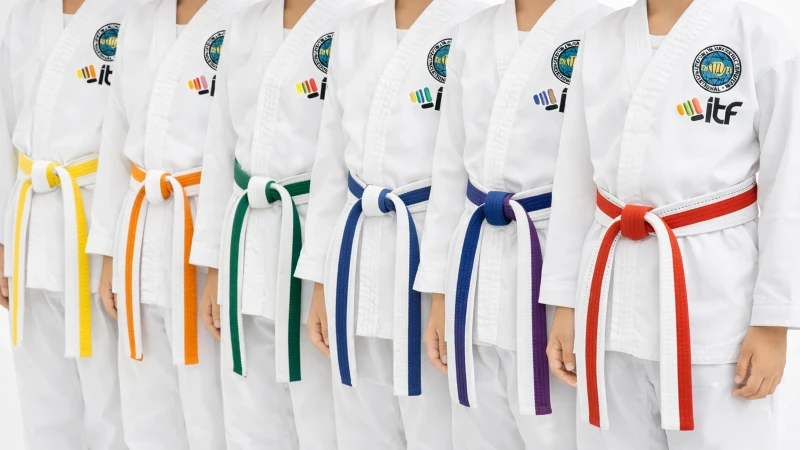
Respecting child development stages
A child aged three to six processes information very differently from an adult or older child. Attention span, balance, reaction speed, coordination, memory, and emotional regulation are still actively developing during these years.
While an adult student may learn multiple fundamental movements, exercises, and kicks within a short period of time, younger children often require significantly more repetition before movements become natural and controlled. This is completely normal and developmentally appropriate.
The Confidence System acknowledges this reality. Instead of treating slower progress as failure, the system treats early childhood training as a long-term developmental journey where every step is meaningful, achievable, and age-appropriate.
While an adult student may learn multiple fundamental movements, exercises, and kicks within a short period of time, younger children often require significantly more repetition before movements become natural and controlled. This is completely normal and developmentally appropriate.
The Confidence System acknowledges this reality. Instead of treating slower progress as failure, the system treats early childhood training as a long-term developmental journey where every step is meaningful, achievable, and age-appropriate.
Structure of the Confidence System
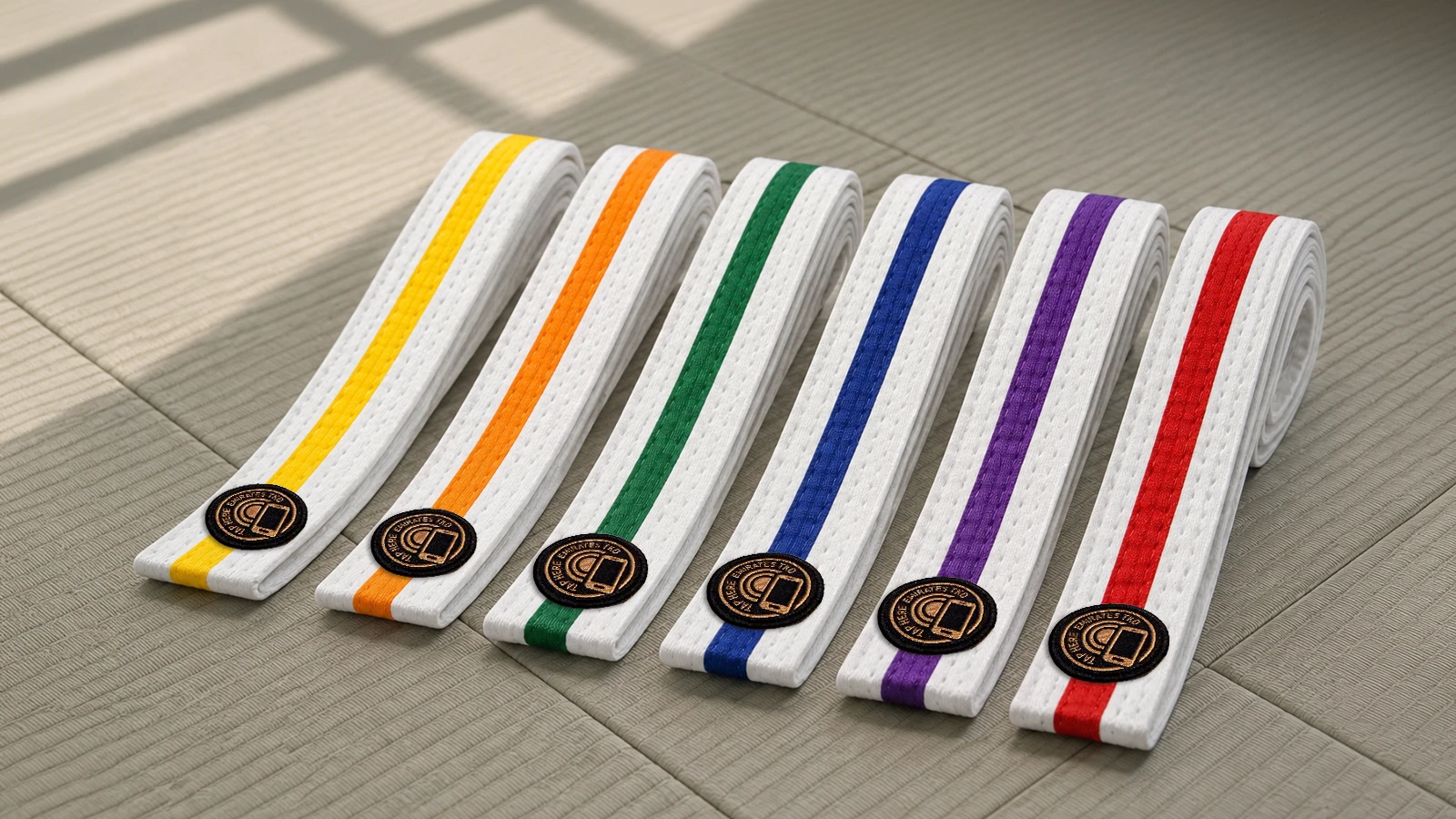
All beginner stages maintain the symbolic innocence of the White Belt through the white base colour. A single coloured transversal line identifies each developmental stage of progress. The sequence progresses through:
* White Belt with Yellow Line
* White Belt with Orange Line
* White Belt with Green Line
* White Belt with Blue Line
* White Belt with Purple Line
* White Belt with Red Line
These are not shortcuts to higher rank. They are structured confidence milestones within the beginner White Belt journey. Each stage represents the successful understanding of specific movements, behavioural goals, and developmental skills.
The coloured line gives children visible progress while helping parents and instructors clearly understand the child current stage of development.
* White Belt with Yellow Line
* White Belt with Orange Line
* White Belt with Green Line
* White Belt with Blue Line
* White Belt with Purple Line
* White Belt with Red Line
These are not shortcuts to higher rank. They are structured confidence milestones within the beginner White Belt journey. Each stage represents the successful understanding of specific movements, behavioural goals, and developmental skills.
The coloured line gives children visible progress while helping parents and instructors clearly understand the child current stage of development.
Confidence before complexity
The purpose of the Confidence System is not to create very young “advanced” martial artists. The goal is to create confident, disciplined, emotionally healthy children who enjoy learning and develop positive habits from an early age.
At this age, the most important achievements are often not technical. Improvements in listening, focus, teamwork, confidence, patience, emotional control, and participation are equally valuable. A child who learns to try again after failure, follow instructions respectfully, and believe in themselves is already succeeding.
Technical skills are still important, but they are taught gradually in a way that supports confidence instead of creating unnecessary pressure.
At this age, the most important achievements are often not technical. Improvements in listening, focus, teamwork, confidence, patience, emotional control, and participation are equally valuable. A child who learns to try again after failure, follow instructions respectfully, and believe in themselves is already succeeding.
Technical skills are still important, but they are taught gradually in a way that supports confidence instead of creating unnecessary pressure.
Technical progression by stage
Each confidence rank introduces a carefully selected movement or exercise appropriate for the child developmental level. The system gradually develops balance, coordination, directional awareness, reaction speed, and body control.
Early stages focus on simple stance work, punching, movement, and beginner kicking mechanics. Later stages introduce turning, jumping, directional exercises, and memory-based sequences such as Saju Jirugi and Saju Makgi.
By the final Red Line stage, students review all previously learned techniques before transitioning into the traditional White-Yellow Belt grading structure.
Early stages focus on simple stance work, punching, movement, and beginner kicking mechanics. Later stages introduce turning, jumping, directional exercises, and memory-based sequences such as Saju Jirugi and Saju Makgi.
By the final Red Line stage, students review all previously learned techniques before transitioning into the traditional White-Yellow Belt grading structure.
Transition into the traditional ITF system
Promotion to traditional White-Yellow Belt, also known as 9th Kup, represents the completion of the Confidence System. At this stage, the student must demonstrate all previously learned techniques with improving consistency, confidence, coordination, and control.
Students also begin performing the fundamental exercises Four Directions Punch (Saju Jirugi) and Four Directions Block (Saju Makgi), which introduce structured movement sequences and prepare them for formal ITF patterns later in their training.
This transition ensures that children enter the traditional colour belt system with a stronger emotional, physical, and technical foundation than would normally be expected at their age.
Students also begin performing the fundamental exercises Four Directions Punch (Saju Jirugi) and Four Directions Block (Saju Makgi), which introduce structured movement sequences and prepare them for formal ITF patterns later in their training.
This transition ensures that children enter the traditional colour belt system with a stronger emotional, physical, and technical foundation than would normally be expected at their age.
Emirates Taekwon-Do rank system
Learn how the Emirates Taekwon-Do rank system develops students from early childhood through advanced Traditional ITF black belt levels.
Discover this related learning.
Learn More Protecting the integrity of rank
The Confidence System exists partly to protect the integrity of traditional ITF ranking standards. Young children should not be rushed through adult ranks before they are physically, emotionally, or mentally prepared.
Advancing children too quickly through adult rankings may appear impressive temporarily, but it often creates technical weaknesses, unrealistic expectations, and long-term developmental gaps. Rank should represent real growth, maturity, understanding, and responsibility.
By separating early childhood progression from the traditional adult ranking structure, Emirates Taekwon-Do ensures that future colour belts and black belts develop honestly, progressively, and with strong foundations.
Advancing children too quickly through adult rankings may appear impressive temporarily, but it often creates technical weaknesses, unrealistic expectations, and long-term developmental gaps. Rank should represent real growth, maturity, understanding, and responsibility.
By separating early childhood progression from the traditional adult ranking structure, Emirates Taekwon-Do ensures that future colour belts and black belts develop honestly, progressively, and with strong foundations.
Learning instead of commercial grading
In many martial arts schools, frequent examinations become a commercial system focused on constant paid promotions. Over time, this can reduce technical standards and shift attention away from real learning.
At Emirates Taekwon-Do, beginner colour belt examinations are not treated as commercial products. Progression is considered part of the learning process itself. The Confidence System exists to support development, motivation, and positive childhood experiences rather than creating financial pressure or artificial advancement.
This allows instructors to maintain honest standards while ensuring that every promotion remains meaningful, deserved, and developmentally appropriate for the child.
At Emirates Taekwon-Do, beginner colour belt examinations are not treated as commercial products. Progression is considered part of the learning process itself. The Confidence System exists to support development, motivation, and positive childhood experiences rather than creating financial pressure or artificial advancement.
This allows instructors to maintain honest standards while ensuring that every promotion remains meaningful, deserved, and developmentally appropriate for the child.
Join Us!
Join our Emirates Taekwon-Do family in Dubai and watch your child thrive through our Confidence System!
Frequently Asked Questions
Frequently Asked Questions
- What is the Confidence System in Taekwon-Do? The Confidence System is a structured approach for young children that focuses on gradual skill development and confidence building.
- How does the intermediate belt system work? The system includes various colored lines on the White Belt to represent different developmental stages, ensuring age-appropriate learning.